← Profile

Research resource library

Research resources, organized for reuse.

A growing collection of tutorials, open-source software, models, datasets, and reproducible results connected to my research.

Library structure

01LearnTutorials and guided material
02BuildOpen-source research software
03ReuseModels, data, and experiment recipes
01

Tutorials

Tutorials that connect concepts to working methods.

Structured material for understanding a research problem, following the methodology, and applying it through concrete implementations.
AxOSyn

Featured tutorial · ESWEEK 2025, Taipei

Design, Model & Explore Approximate Arithmetic Circuits

A hands-on path from fabric-aware operator design to aligned software and hardware models, followed by multi-objective search for Pareto-optimal arithmetic implementations.

DesignShape the operator

Express approximate adders, multipliers, and MACs with the target FPGA or ASIC fabric in mind.

ModelAlign behavior and hardware

Represent operators consistently in Python and HDL, then characterize behavioral error and PPA.

ExploreSearch the trade-off surface

Use exhaustive, sampling, or evolutionary search to identify non-dominated application-specific choices.

DesignMap arithmetic directly to the FPGA fabric.
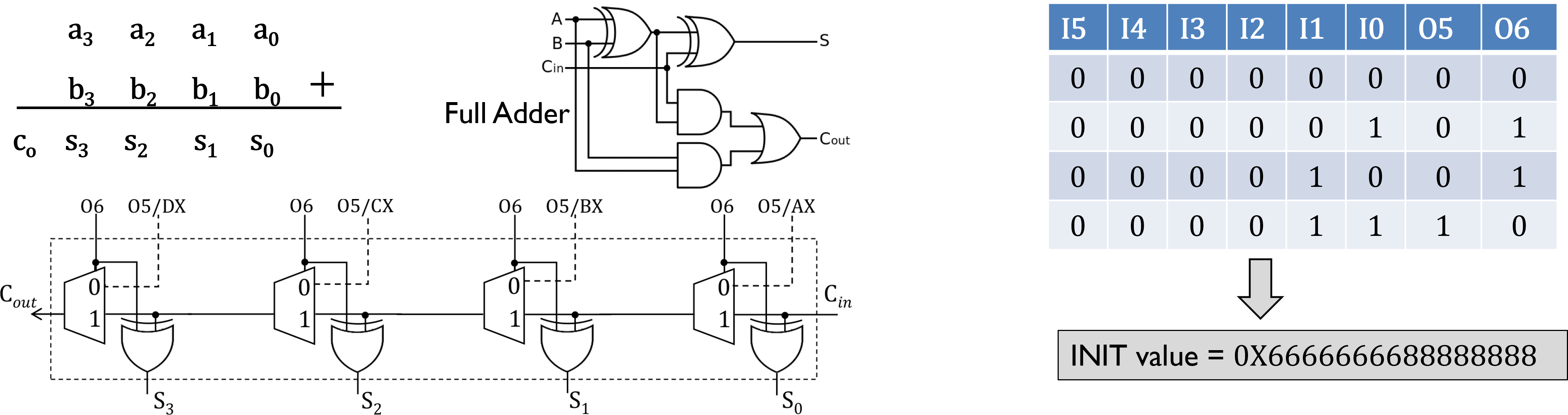
Full-adder logic mapped to FPGA LUT truth-table values and a carry chain
LUT truth tables and dedicated carry resources preserve the intended arithmetic micro-architecture through synthesis.
ModelMake approximation an explicit structural choice.
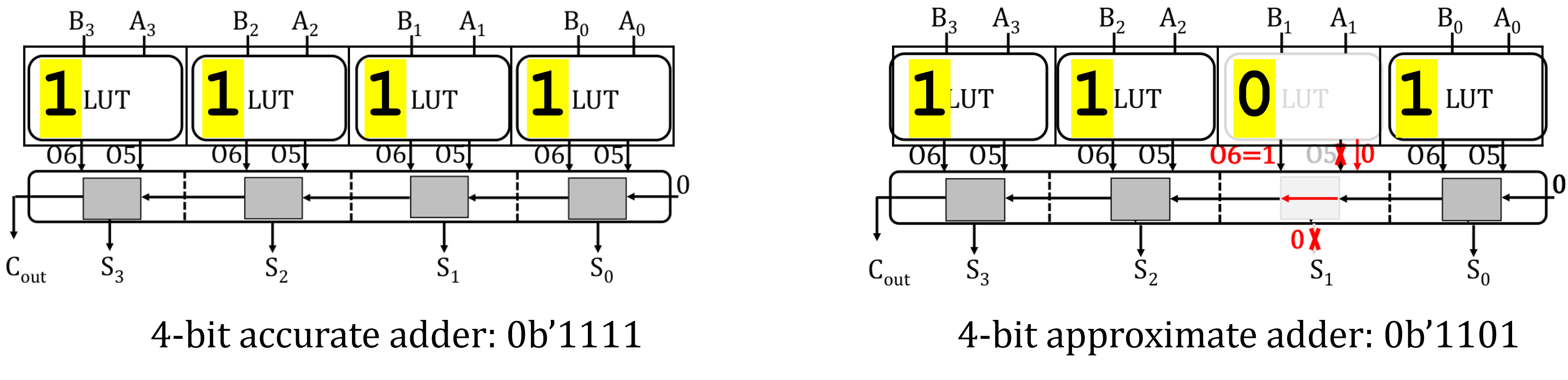
Accurate LUT-based adder beside a structurally pruned approximate adder
Selective LUT and carry pruning exposes controllable hardware-saving choices that can also be represented in behavioral models.
ExploreMeasure progress across competing objectives.
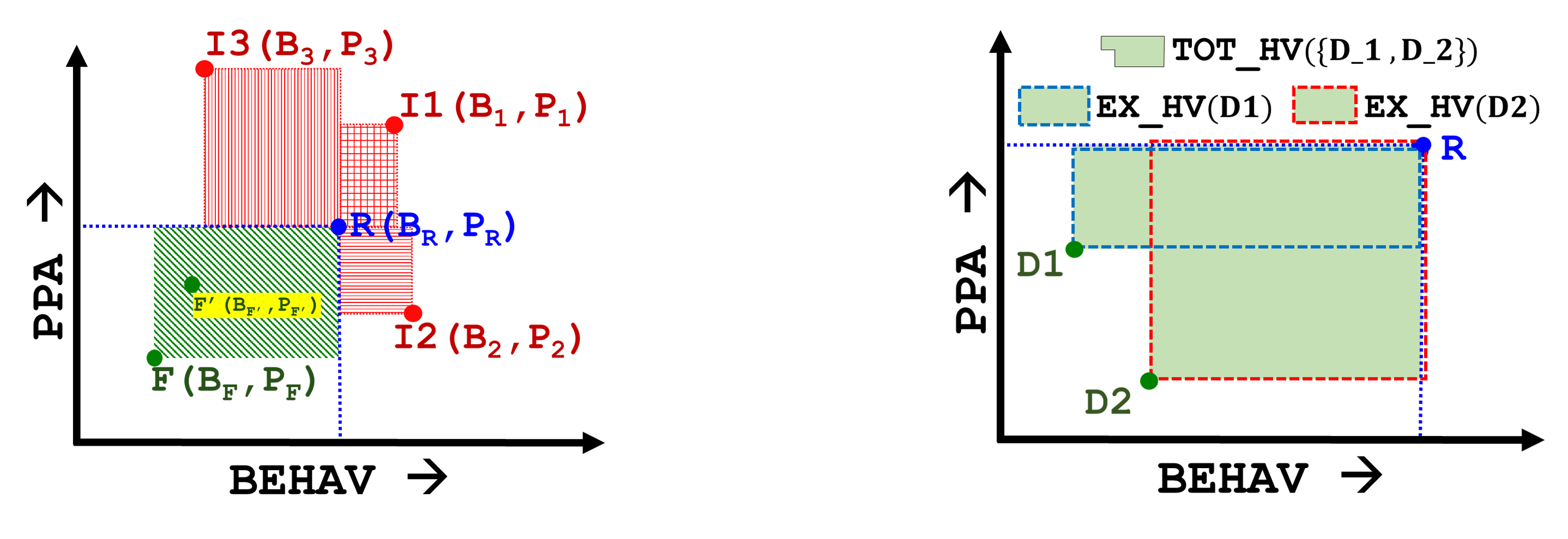
Pareto-front and hypervolume diagrams for multi-objective design-space exploration
Pareto dominance separates useful candidates from dominated ones; hypervolume provides a single measure of search quality.
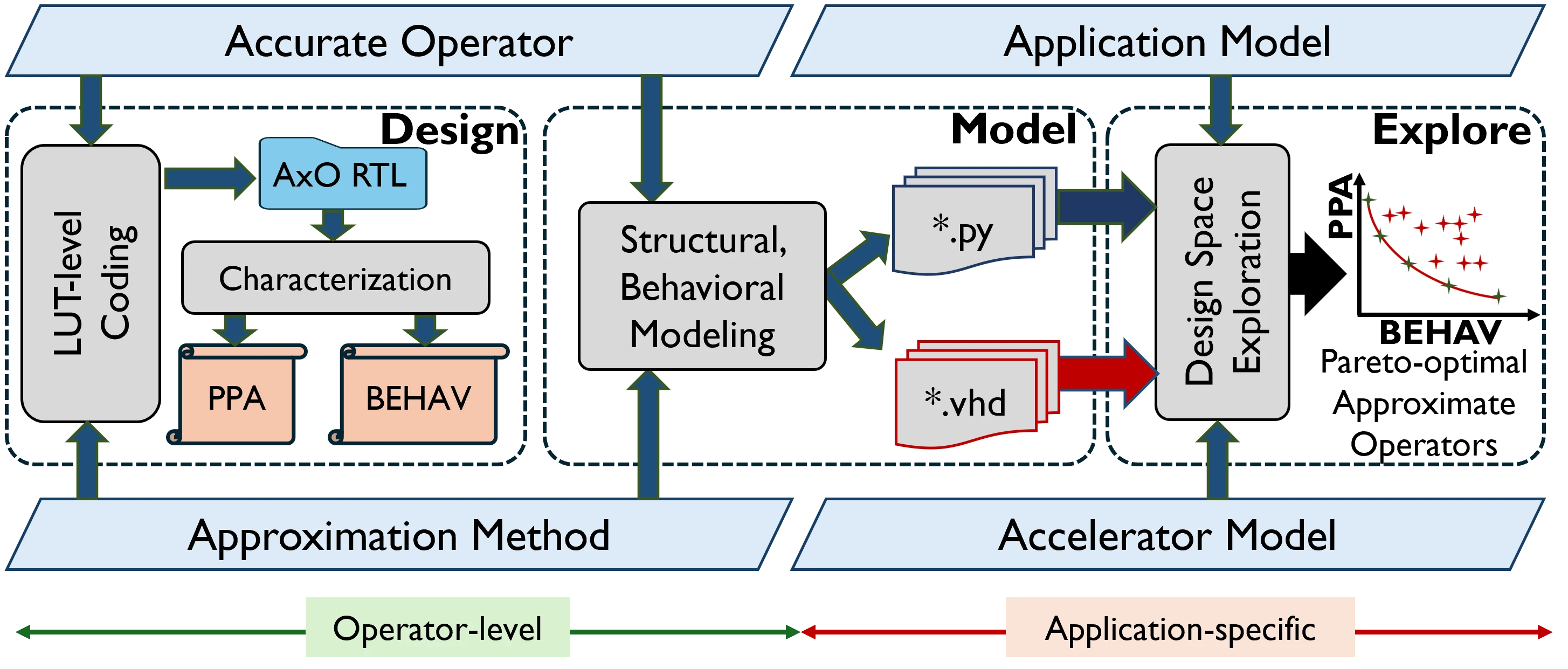
AxOSyn Design, Model, and Explore methodology
Operator-level design and characterization feed reusable models; design-space exploration connects them to an application or accelerator model.
02

Software

Tools that turn research methods into usable workflows.

Implementations for inspecting, extending, and applying the methods behind published work, with accessible code and configurations for independent use.

AxOSyn

Featured tool · GPL-3.0-only

AxOSyn

A Python framework for modeling, characterizing, and exploring approximate arithmetic operators across behavioral accuracy and power–performance–area objectives.

Model

Accurate and approximate operator families controlled through reusable configurations.

Estimate

Behavioral, approximate-output, database, and machine-learning estimators.

Explore

Genetic, exhaustive, random-sampling, and list-evaluation design-space searches.

Characterize

Optional Xilinx Vivado flows for true FPGA PPA measurements.

Research software

Python toolkit · optional Vivado integrationPublic repository · configuration-driven experiments · tests and notebooks included
03

Artifacts

Models, data, and experiment recipes beyond the paper.

Resources for inspecting reported trade-offs, adapting a method to a different system, or reproducing an experiment with a new configuration.

AxOSyn collection

AxOSyn operator modeling and exploration artifacts

Characterization results, operator-model implementations, and runnable design-space exploration configurations.

Use the material in a course or research workflow

Teaching & supervision →